


Key Takeaways
- Emerging electronic warfare (EW) threats are becoming harder to detect due to low-power transmissions, waveform agility, and spectrum maneuvering techniques.
- AI enables faster signal identification, pattern recognition, and threat classification, creating a foundation for cognitive electronic warfare.
- High-quality RF data is essential for AI performance, placing greater importance on RF front ends, receiver sensitivity, and signal integrity.
- Edge computing and high-speed digitalization help transform RF data into actionable intelligence closer to the battlefield.
- Future-proof EW systems require wideband architectures that improve spectrum awareness while balancing SWaP-C requirements.
- RFMW provides end-to-end RF and microwave solutions, helping engineers build scalable, high-performance EW systems with technologies spanning the entire signal chain.
Meeting the Evolving Challenges of Modern Electronic Warfare
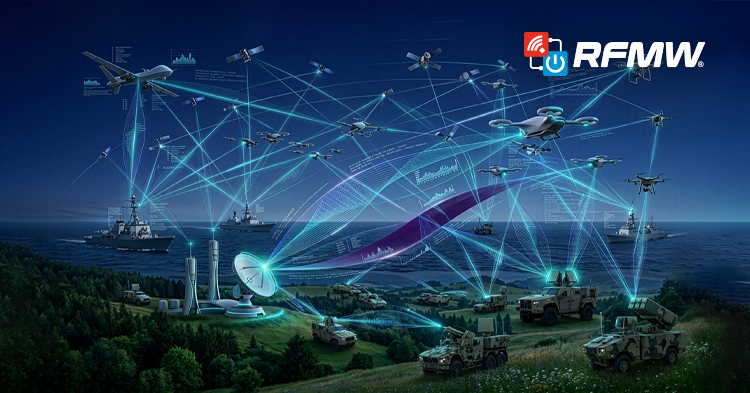
While the primary purpose of electronic warfare (EW) remains control of the electromagnetic spectrum, the playing field has evolved significantly. Modern EW systems now rely on multifunction RF architectures that operate across air, land, and sea.
Simultaneously, threat signals have become increasingly difficult to detect. Low-power emissions, spread-spectrum communications, frequency-hopping techniques, and adaptive waveforms all reduce signal visibility and complicate identification efforts. In response, defense organizations are prioritizing RF components that provide broader spectrum coverage, enabling greater detection opportunities, fewer blind spots, and faster identification of signals of interest.
Publicly disclosed EW and SIGINT architectures often target wide frequency coverage across microwave and millimeter-wave bands, including ranges such as 2-18 GHz, 6-18 GHz, and 32-38 GHz. These requirements illustrate the breadth of spectrum modern systems may be required to sense, monitor, characterize, and exploit. Faster detection and characterization capabilities help reduce decision timelines, manage increasing spectrum congestion, and support real-time operational demands in contested environments.
AI’s Emerging Role in EW Systems
In a move that is shifting systems beyond simple detection and data collection, artificial intelligence (AI) integrations within EW are transforming decision-making with real-time, actionable intelligence. Environments are more congested and dynamic than ever, and AI is helping operators process larger volumes of RF data, identify threats more quickly, and make better-informed decisions under time-sensitive conditions.
AI-integrated systems enable a level of cognitive electronic warfare that can automatically identify and characterize signals, recognize patterns across the spectrum, and classify threat potentials with greater speed and accuracy than traditional analysis. New AI-enabled capabilities allow systems to continuously assess their environment, adapt to changing conditions, and support dynamic response against emerging threats.
Why AI Depends on High-Fidelity RF Data
AI is only as effective as the data it receives, and in electronic warfare, that begins at the sensor level. The quality of AI-driven analytics is ultimately determined by the quality of the RF data entering a system. Accurate signal capturing is essential for detecting, identifying, and classifying signals of interest, particularly in environments where emissions may be weak, intermittent, or specifically designed to avoid detection. RF front ends are foundational to this process, capturing low-power signals, preserving signal integrity, and ensuring critical information is available for downstream processing.
Although the connection between AI and RF components may not always be obvious, the performance of amplifiers, filters, mixers, converters, and other signal-chain components directly impacts the quality of the data available to AI algorithms. These solutions enable the digitalization of the RF environment, providing the clean, reliable inputs needed for advanced analytics and automated decision-making.
Engineering a high-performance signal chain requires careful consideration of receiver architectures, analog-to-digital conversion, and overall data fidelity. As signals move between analog and digital domains, maintaining accuracy while minimizing latency is crucial.
Detecting Signals Hidden in Noise
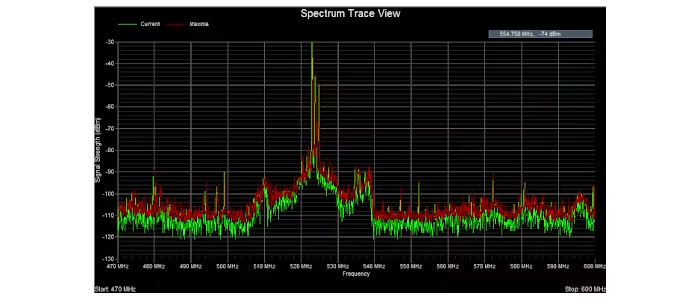
One of the fundamental challenges in modern EW is the increasing number of adversaries leveraging low-probability-of-detection techniques that conceal signals within the noise floor, making them significantly more difficult to identify and track.
Successful threat detection depends on:
- Signal-to-noise ratio (SNR)
- Receiver sensitivity
- System noise figure
- Signal-chain performance
The ability to detect weak emissions heavily depends on signal-to-noise ratio, receiver sensitivity, and system performance. Excessive noise within a signal chain can significantly inhibit threat detection capabilities. As a result, developers are prioritizing solutions like low-noise amplifiers, tunable filters, and high-performance receivers to preserve signal integrity.
How High-Speed Digitalization and Edge Computing Enable Faster Responses
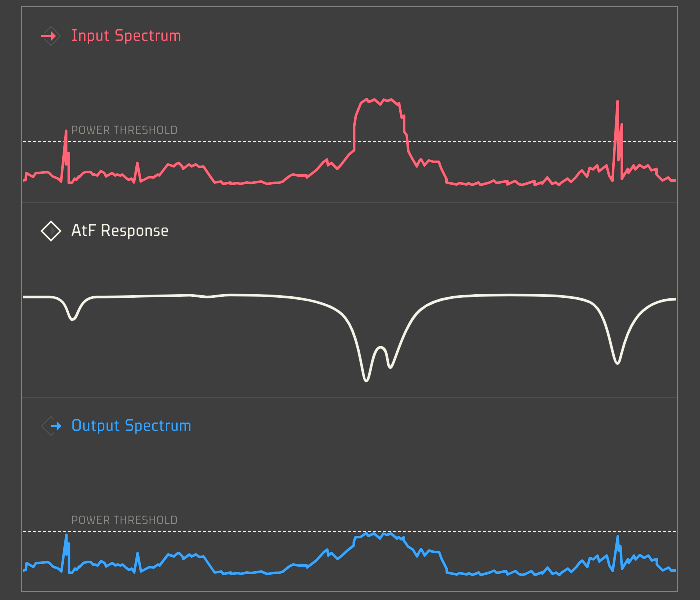
Rather than transmitting large volumes of data back into centralized command-and-control centers for analysis, AI and edge computing are bringing processing closer to the point of action. This approach reduces latency and enables operators to generate real-time intelligence at the tactical edge, accelerating decision-making and improving responsiveness in dynamic operational environments.
Speed Becomes the Competitive Advantage
When integrating AI at the edge in EW environments, speed is no longer a performance metric. It becomes the definitive advantage. High-speed data converters, advanced analytics, and AI-driven processing work together to transform raw RF data into actionable intelligence, enabling operators to identify threats, assess conditions, and respond with greater agility. As operational timelines continue to compress, the ability to move from detection to action faster than an adversary becomes a decisive advantage.
RF Architectures Supporting Adaptable EW Systems
Wideband RF architectures in EW systems are becoming essential for expanding spectrum awareness and reducing the complexity of searching across multiple frequency ranges. By leveraging technologies such as wideband receivers and broadband low-noise amplifiers (LNAs), engineers can increase coverage while streamlining system design. Components capable of operating across broader frequency ranges reduce the need for multiple dedicated devices, simplifying architectures, improving efficiency, and enabling faster identification of signals of interest.
Balancing Performance and SWaP-C Requirements
As EW systems become more digital and AI-enabled, optimizing performance requires a holistic approach to system design. While AI may not be directly tied to any single RF component, it influences the requirements placed on the entire signal chain, from signal acquisition and processing to data transport and analysis.
Designers must balance performance goals against stringent size, weight, power, and cost (SWaP-C) constraints, integrating technologies that support increasing levels of digitization while maintaining operational efficiency. Success depends on how effectively these elements work together as a unified system.
Designing for Long-Term Adaptability
Electronic warfare threats, missions, and spectrum environments will continue to evolve, making adaptability a critical design consideration. Building around scalable architectures and flexible RF technologies helps ensure systems can accommodate future requirements without extensive redesigns.
This approach provides a degree of future-proofing, extending platform viability while allowing operators to incorporate emerging capabilities, evolving AI tools, and new mission requirements as they arise. In a rapidly changing electromagnetic environment, long-term adaptability is essential for maintaining operational relevance and performance.
How RFMW Supports Next Generation EW System Development
From AI-enabled signal processing and edge computing to wideband spectrum coverage and low-noise signal capture, next-generation electronic warfare systems rely on a highly optimized RF foundation. RFMW is a global distributor with a comprehensive portfolio of RF and microwave solutions that support a wide range of markets.
With expertise spanning the entire EW system signal chain, RFMW is uniquely positioned to help teams identify optimal solutions to improve receiver sensitivity, expand frequency coverage, accelerate digitalization, and meet evolving SWaP-C requirements. Combined with deep application knowledge and dedicated technical support, RFMW serves as a trusted partner for organizations developing the adaptable, high-performance EW platforms needed to address tomorrow’s spectrum challenges.
Key Technologies Enabling Next-Generation EW
Limiters
RF limiters protect sensitive receiver electronics from high-power RF signals, whether originating from hostile jammers, nearby transmitters, or electromagnetic interference events. By preventing receiver saturation and damage, limiters help EW platforms maintain operational readiness while preserving the performance of downstream signal-processing chains.
 | 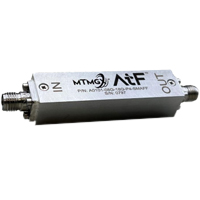 | 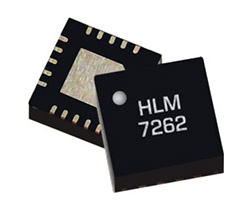 | 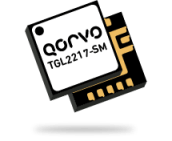 |
A0101-02G-08G-P0 | A0101-08G-18G-P4 | HLM-20PSM | TGL2217-SM |
· Freq: 2 – 8 GHz · Insertion Loss: 2 dB · Return Loss: 12.5 dB · CW Input Power: 10W | · Freq: 8.4 – 18 GHz · Insertion Loss: 3 dB · Return Loss: 13.5 dB · CW Input Power: 10W | · Freq: 0 – 20 GHz · Insertion Loss: 0.5 dB · Return Loss: 15 dB · CW Input Power: 5W | · Freq: 0.1 – 20 GHz · Insertion Loss: 0.9 dB · Return Loss: 20 dB · CW Input Power: 10W |
RF Filters
Wideband EW environments demand exceptional spectral selectivity. RF filters suppress out-of-band interference, improve receiver dynamic range, and help isolate signals of interest in congested spectral environments.
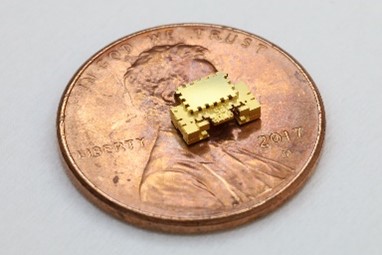 | 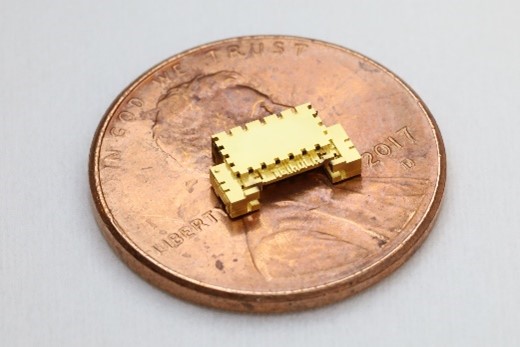 | 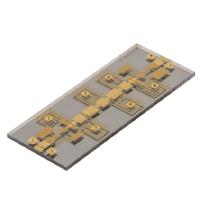 |  |
PSF29B22S | PSF34B32S | B100RH2W | MFLP-00034CSP1 |
· Type: Bandpass · Freq: 18 – 40 GHz · Insertion Loss: 0.4 dB · Return Loss: 20 dB · Size: 4.6 x 7.6 mm | · Type: Bandpass · Freq: 18 – 50 GHz · Insertion Loss: 0.3 dB · Return Loss: 20 dB · Size: 4.1 x 5.8 mm | · Type: Bandpass · Freq: 2 – 18 GHz · Insertion Loss: 0.7 dB · Return Loss: 12 dB · Size: 9.4 x 4.0 mm | · Type: Lowpass · Freq: 0 – 20 GHz · Insertion Loss: 0.5 dB · Return Loss: 25 dB · Size: 1.5 x 1.5 mm |
Amplifiers
RF amplifiers increase signal strength throughout the RF chain while preserving signal integrity. In modern EW, low-noise amplification improves weak signal detection, while gain block and driver amplifiers support transmit functionality, signal conditioning, and digital beamforming architectures.
Gain Block Amplifiers
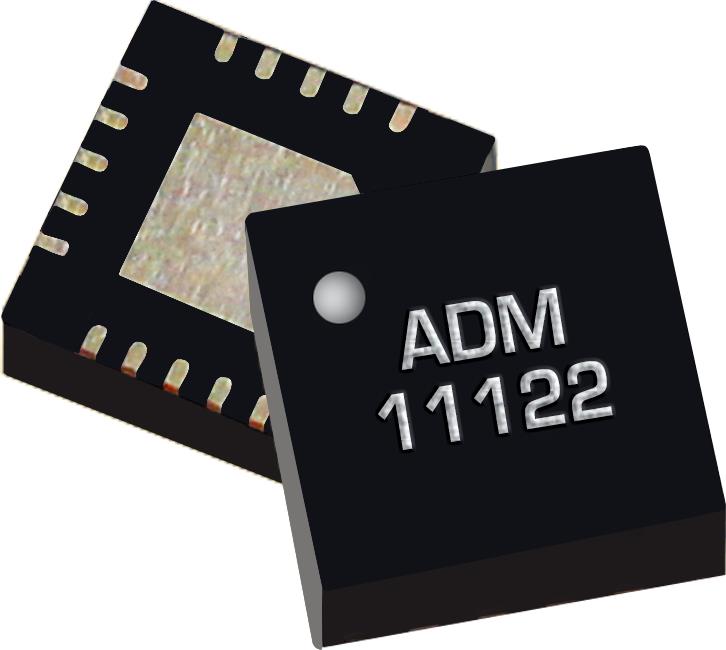 | 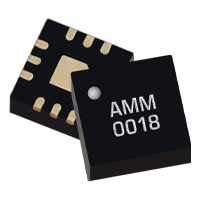 |
ADM-11122PSM | AMM-10860PSM |
· Freq: 2 – 20 GHz · Gain: 19 dB · Output P1dB: 13.7 dBm · Output IP3: 26 dBm · Size: 4 x 4 mm | · Freq: 10 – 30 GHz · Gain: 24.4 dB · Output P1dB: 18.5 dBm · Output IP3: 28.5 dBm · Size: 3 x 3 mm |
Driver Amplifier
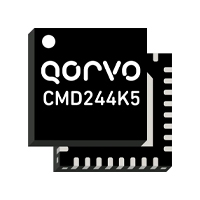 | 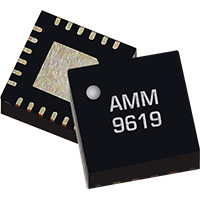 |
CMD244K5 | AMM-9619PSM |
· Freq: 0 – 20 GHz · Gain: 17.5 dB · Output P1dB: 25 dBm · Output IP3: 31 dBm · Size: 5 x 5 mm | · Freq: 2 – 26 GHz · Gain: 16.1 dB · Output P1dB: 18.2 dBm · Output IP3: 28 dBm · Size: 4 x 4 mm |
Low Noise Amplifiers (LNAs)
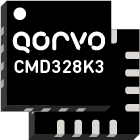 | 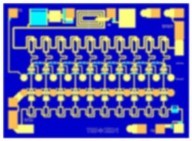 | 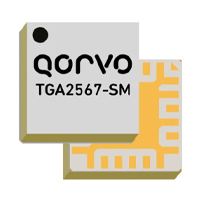 | 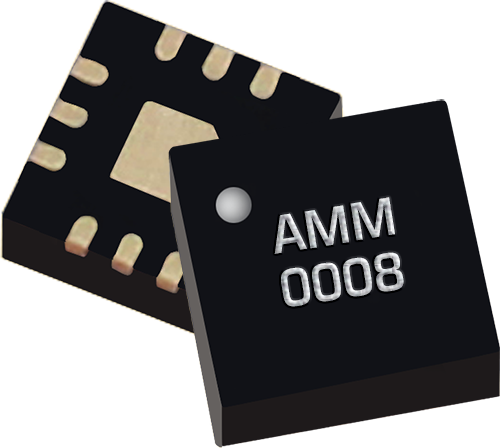 | 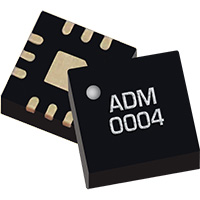 |
CMD328K3 | TGA2227 (DIE) | TGA2567-SM | AMM-9853PSM | ADM-10717PSM |
· Freq: 6 – 18 GHz · Gain: 26 dB · P1dB: 25 dBm · Noise Figure: 1.8 dB · Size: 3 x 3 mm | · Freq: 2 – 22 GHz · Gain: 16 dB · P1dB: 22.6 dBm · Noise Figure: 2.5 dB · Size: 2.0 x 1.5 mm | · Freq: 2 – 20 GHz · Gain: 17 dB · P1dB: 19 dBm · Noise Figure: 2 dB · Size: 4 x 4 mm | · Freq: 0 – 20 GHz · Gain: 16.5 dB · P1dB: 17 dBm · Noise Figure: 1.8 dB · Size: 3 x 3 mm | · Freq: 18 – 40 GHz · Gain: 16.7 dB · P1dB: -2.5 dBm · Noise Figure: 2.5 dB · Size: 3 x 3 mm |
High Power Solid State Power Amplifiers (SSPAs)
High-power SSPAs provide the output power required for electronic attack, jamming, radar, and long-range communications applications. Modern SSPAs enable higher transmit power while improving efficiency, reliability, and spectral performance.
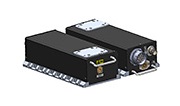 | 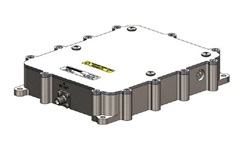 | 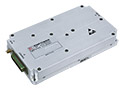 |
QPR3238 | QPB0618J | 1212 |
· Freq: 32 – 38 GHz · Gain: 70 dB · Psat: 158 W · PAE: 15% | · Freq: 2 – 18 GHz · Gain: 42 dB · Psat: 31 W · PAE: 15% | · Freq: 2 – 6 GHz · Gain: 61 dB · Psat: 65 W · PAE: – |
Directional Couplers
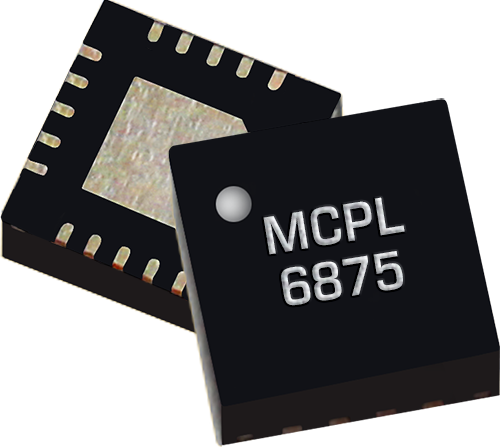
Directional couplers enable signal monitoring, power sampling, and signal distribution without interrupting the primary RF path. These capabilities are critical for real-time system calibration, radar warning receivers, and adaptive EW.
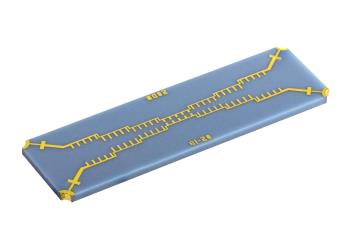 | 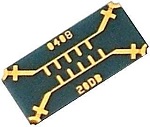 |  |
FPC07180 | FPC07182 | MC16-0222SM |
· Freq: 2 – 18 GHz · Insertion Loss: 0.8 dB · Directivity: 10 dB · Coupling: 20 dB · Size: 12.7 x 3.8 mm | · Freq: 20 – 40 GHz · Insertion Loss: 1.5 dB · Directivity: 10 dB · Coupling: 10 dB · Size: 1.7 x 1.3 mm | · Freq: 2 – 22 GHz · Insertion Loss: 1.6 dB · Directivity: 23 dB · Coupling: 16 dB · Size: 4 x 4 mm |
Hybrid Couplers
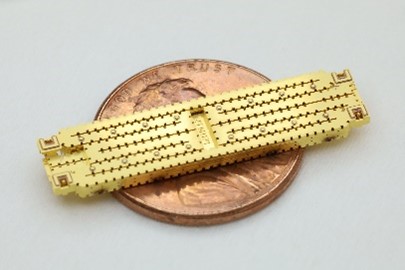
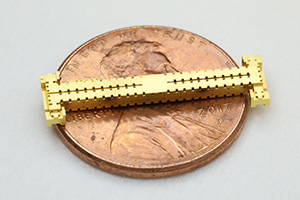
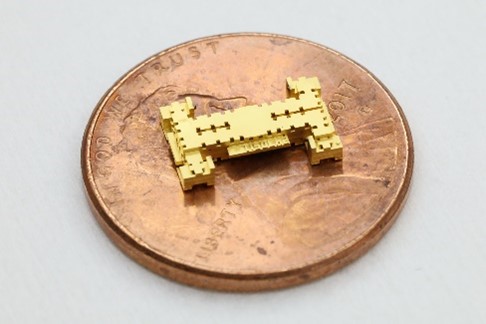
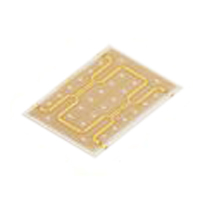
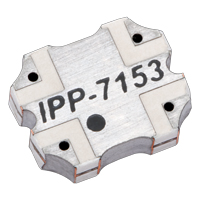
Hybrid couplers are key RF building blocks that support signal combining, splitting, phase control, power amplifier combining, and beamforming functions in EW, advanced radar, high-power electronic attack and jamming systems, and phased-array antennas.
 |  |  |  |  |
PSC18H17S | PSC18H07S | PSC50H08S | FHC10292 | IPP-7153 |
· Freq: 2 – 18 GHz · Amp Bal: ±1.1 dB · Phase Bal: ±1.1° · Isolation: 23 dB · Size: 28.8 x 7.1 mm | · Freq: 6 – 18 GHz · Amp Bal: ±0.5 dB · Phase Bal: ±1.2° · Isolation: 30 dB · Size: 21.3 x 5.7 mm | · Freq: 18 – 50 GHz · Amp Bal: ±0.9 dB · Phase Bal: ±1.0° · Isolation: 25 dB · Size: 9.3 x 5.7 mm | · Freq: 6 – 18 GHz · Amp Bal: ±1.0 dB · Phase Bal: ±3.0° · Isolation: 15 dB · Size: 8.9 x 6.4 mm | · Freq: 6 – 12 GHz · Amp Bal: ±0.7 dB · Phase Bal: ±6° · Isolation: 16 dB · Size: 6.4 x 5.1 mm |
RF Combiners
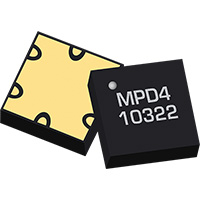
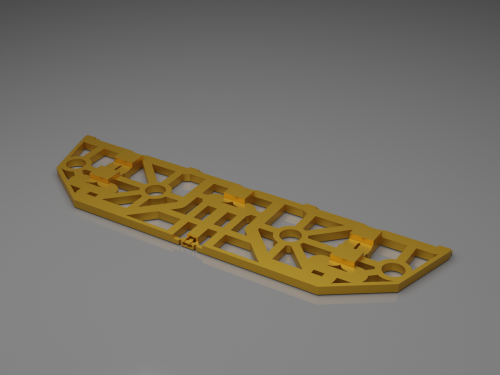
RF combiners merge signals from multiple paths while maintaining performance and minimizing signal degradation. They are increasingly important in multi-channel receivers, phased arrays, and distributed EW architectures.
 |  | 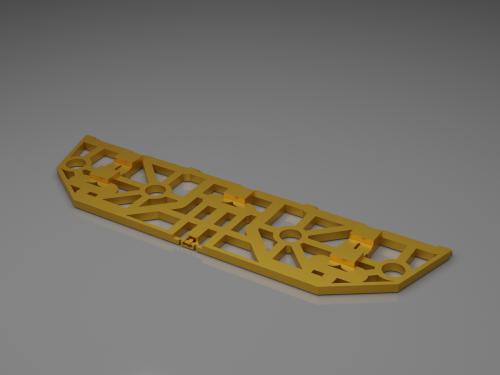 |
MPD4-0218CSP3 | PSX12Q12W | PSX29Q22W |
· Freq: 2 – 18 GHz · Insertion Loss: 0.8 dB · Isolation: 29 dB · Power Handling: 1 W · Size: 3.5 x 3.5 mm | · Freq: 6 – 18 GHz · Insertion Loss: 0.6 dB · Isolation: 12 dB · Power Handling: 20 W · Size: 49.7 x 13.9 mm | · Freq: 18 – 40 GHz · Insertion Loss: 0.5 dB · Isolation: 14 dB · Power Handling: 20 W · Size: 40.7 x 9.8 mm |
Mixers
RF mixers translate signals between frequency bands, enabling wideband receivers and transmitters to process increasingly diverse RF threats. Frequency conversion remains fundamental to signal inception, analysis, and offensive capabilities.
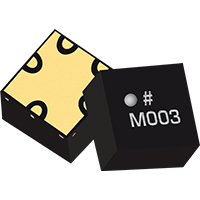 | 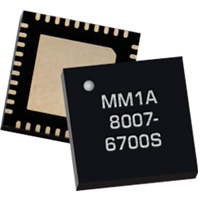 | 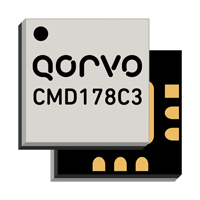 |
MM1-1886HCSP2 | MM1A-0626SPSM | CMD178C3 |
· RF/LO Freq: 18 – 86 GHz · IF Freq: 0 – 27 GHz · Conversion Loss: 9 dB · Input IP3: 20 dBm · Size: 2.5 x 2.5 mm | · RF/LO Freq: 6 – 26 GHz · IF Freq: 0 – 9 GHz · Conversion Loss: 7.5 dB · Input IP3: 27 dBm · Size: 6 x 6 mm | · RF/LO Freq: 11 – 21 GHz · IF Freq: 0 – 6 GHz · Conversion Loss: 6 dB · Input IP3: 16 dBm · Size: 3 x 3 mm |
Multiplexers
Multiplexers reduce system size, weight, and power (SWaP) by allowing multiple frequency paths to share common RF resources. This capability is increasingly important in dense EW and communications payloads.
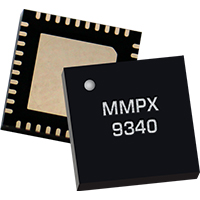 | 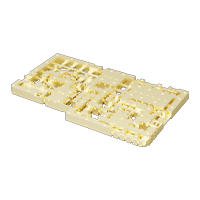 | 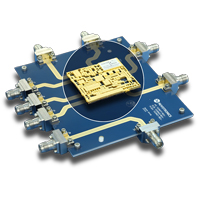 |
MMPX-00002PSM | PSM0640B4S | PSM0218B5S |
· Freq: 0 – 18 GHz · # of Channels: 4 · Insertion Loss: 1.9 dB · Power Handling: 1 W · Size: 6 x 6 mm | · Freq: 0 – 38 GHz · # of Channels: 4 · Insertion Loss: 1.1 dB · Power Handling: 5 W · Size: 24.7 x 14.7 mm | · Freq: 0 – 18 GHz · # of Channels: 5 · Insertion Loss: 1.3 dB · Power Handling: 5 W · Size: 26.5 x 26 mm |
Tunable Filters & Switch Filter Banks
Cognitive and adaptive EW systems increasingly require dynamic spectrum access. Tunable filters and switch filter banks allow systems to rapidly reconfigure frequency coverage, optimize selectivity, and adapt to changing threat environments in real time.
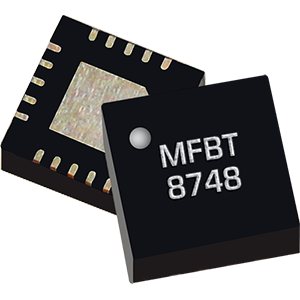 | 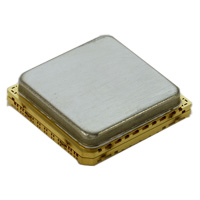 |
MFBT-00003PSM | PSB1030148 |
· Type: Adjustable Bandpass · Tunable Range: 8 – 30 GHz · Insertion Loss: 7.5 dB · Return Loss: 10 dB · Size: 4 x 4 mm | · Type: Switched Filter · # of Channels: 4 · Frequency: 17.5 – 24 – 29.5 – 35 – 40 GHz · Switching Speed: 20 ns · Size: 15.8 x 16.3 mm |
Switches
RF switches enable rapid signal routing between receivers, antennas, filters, and transmit paths. Their fast switching speeds support agile spectrum management and multifunction EW architectures.
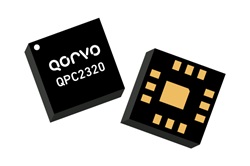 | 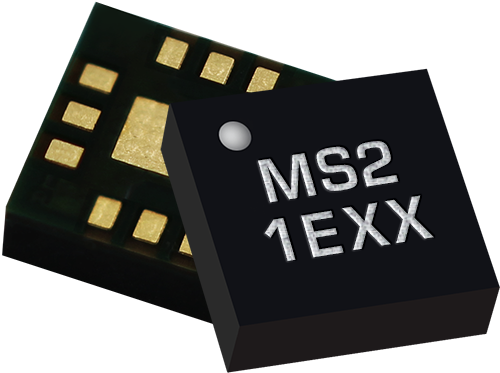 |
QPC2320 | MSW2-1001ELGA |
· Freq: 0.2– 20 GHz · Insertion Loss: 0.6 dB · Isolation: 64 dB · Switching Time: 47 ns · Size: 2.25 x 2.25 mm | · Freq: 0.1– 40 GHz · Insertion Loss: 1.1 dB · Isolation: 49 dB · Switching Time: 85 ns · Size: 2.25 x 2.25 mm |
Front-End Modules (FEMs)
Integrated front-end modules combine multiple RF functions into compact assemblies, helping designers accelerate development while reducing board space and system complexity.
 |
QPM1000 |
· Type: Limiter + LNA · Freq: 2– 20 GHz · Gain: 17 dB · Noise Figure: 2.7 dB · CW Input Power: 4 W · Size: 6 x 5 mm |
Technical Resources:
- Examining the Definition of “Wideband” Through the Lens of Electronic Warfare Systems
- Wideband RF in Electronic Warfare: Balancing Power, Bandwidth and Real-Time Performance
- Wideband Receiver Design for Satellite-Based Electronic Warfare
AI in Electronic Warfare Systems Frequently Asked Questions
How is AI being used in electronic warfare?
AI is enabling electronic warfare systems to move beyond basic signal detection and data collection by providing real-time analysis of RF environments. AI-powered systems can identify signals, recognize patterns, classify potential threats, and support faster decision-making, helping operators respond more effectively in dynamic and contested spectrum environments.
Why is RF data important for AI in electronic warfare?
AI models are only as effective as the data they receive. High-quality RF data allows AI systems to accurately detect, identify, and classify signals of interest. Poor signal quality, excessive noise, or data loss can reduce the accuracy of AI-driven analysis and limit operational effectiveness.
What role do RF front ends play in AI-enabled EW systems?
RF front ends form the foundation of AI-enabled electronic warfare systems. Components such as low-noise amplifiers (LNAs), filters, mixers, and data converters capture and condition RF signals before they are processed digitally. Their performance directly impacts the quality of data available for AI-based analytics and decision-making.
How does edge computing improve electronic warfare operations?
Edge computing allows signal processing and AI analysis to occur closer to the point of action rather than relying on centralized command-and-control centers. This reduces latency, accelerates intelligence generation, and enables operators to make faster tactical decisions in rapidly changing environments.
Why is detecting low-power signals becoming more challenging?
Modern adversaries increasingly use low-power emissions, frequency-hopping techniques, spread-spectrum communications, and adaptive waveforms to reduce signal visibility. These techniques can cause signals to blend into the noise floor, making advanced receivers, low-noise RF components, and AI-driven analytics essential for successful detection.
What technologies are shaping the future of electronic warfare systems?
Several technologies are driving the evolution of modern electronic warfare platforms, including AI-enabled analytics, edge computing, high-speed data converters, wideband receivers, broadband low-noise amplifiers, and scalable RF architectures. Together, these technologies improve spectrum awareness, accelerate decision-making, and help create EW systems adaptable against evolving threats.