

Just How Bad Is it?
The Explosive Growth of LEO Satellite Constellations
Some historical perspective shows how rapidly the population in orbit has grown. In 2000, there were 700 satellites of all kinds in space. There are now more than 15,000, and by 2040, that figure is expected to reach approximately 560,000 based on planned launches and proposals.
Planned Satellite Mega-Constellations by SpaceX, Amazon, and China
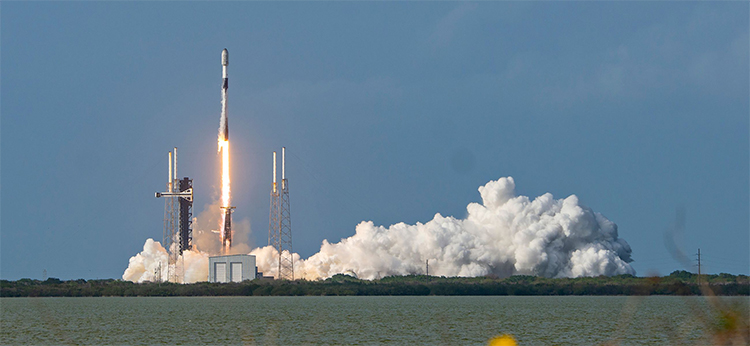
SpaceX has already placed more than 10,000 Starlink satellites in orbit and is launching at an average rate of more than 11 per day. Amazon Leo, formerly Project Kuiper, has FCC authorization for 3,236 satellites. China’s Guowang and Qianfan (Spacesail) constellations have publicly disclosed plans for approximately 13,000 and 14,000 satellites, respectively.
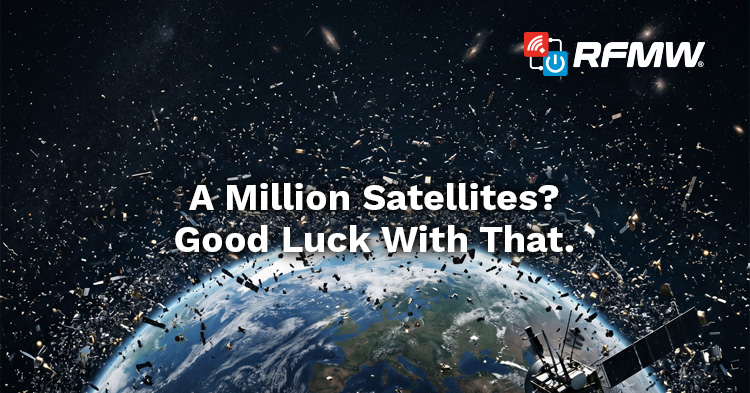
Even Rwanda, in coordination with E-Space, has filed for 330,320 satellites. Adding all current and proposed filings yields a grand total approaching 1 million satellites, all proposed within the past 6 years. Between 2021 and 2025, more LEO satellites have been launched than in the seventy years prior combined. The U.S. Department of Defense maintains its own LEO assets and is planning a substantial expansion through the Space Development Agency’s Proliferated Warfighter Space Architecture, which envisions hundreds of additional spacecraft.
Why One Million Satellites Is a Real Possibility
The numbers proposed for LEO satellite constellations are beginning to sound almost absurd. Active filings now point toward an orbital population approaching 1 million spacecraft, nearly 2 orders of magnitude above what is in space today, with the bulk of those proposals filed in the past 6 years. The RF and microwave consequences affect every part of every link, and the resulting interference, coordination, and hardware problems are severe.
ITU Deployment Rules and Spectrum Warehousing
These projections will almost certainly contract as costs, regulatory friction, and operational realities take effect. For example, the International Telecommunications Union (ITU) enforces strict deployment milestones to prevent spectrum warehousing, the practice of reserving radio frequencies or orbital slots without putting them into use. ITU rules require satellite operators to deploy 10% of their fleet within 2 years, 50% within 5 years, and 100% within 7 years. Operators that miss those targets lose the right to use the allocated spectrum.
Server Farms in Orbit, Because Why Not?
Space-Based Data Centers and Orbital Cloud Computing
In addition to the constellations themselves, several operators are pursuing space-based data centers. SpaceX has sought regulatory approval for an orbital data-center system that could include large numbers of non-geostationary spacecraft, as has Blue Origin, with several other parties also active.
Proponents argue that moving Big Data into orbit is environmentally desirable because it leverages the heat sink of the vacuum space and the high solar flux available in sun-synchronous orbits. By bypassing the land-use and water consumption required for terrestrial cooling, these facilities could enable high-speed edge computing to process satellite data in real time, eliminating the latency and bandwidth bottlenecks of downlinking raw data. Whether this dream will eventually be realized at scale remains an open question. For a deeper look at how onboard processing and AI are reshaping LEO architectures, see our previous article, How AI Takes LEO Satellite Communication to the Edge.
Conjunction Events and Collision Avoidance
Conjunction events, close approaches between orbiting objects, are now routine. Active satellites from major operators receive thousands of conjunction warnings per year, and SpaceX has reported that Starlink performs hundreds of avoidance maneuvers every six months. With the population growing roughly an order of magnitude over the next decade, the conjunction rate will rise dramatically.
What About All That Space Junk?
Anti-Satellite Tests and the Growing Debris Problem
Orbital debris is a separate and worsening problem. The 2021 Russian direct-ascent anti-satellite test against Cosmos 1408 created more than 1,500 trackable fragments and many smaller pieces. China’s 2007 Fengyun-1C ASAT test created fragments at a higher altitude, where atmospheric drag is negligible, and the debris will remain in orbit for centuries.
The Kessler Syndrome Threat
India’s 2019 Mission Shakti test added more debris, although at a lower altitude where natural decay is faster. Each fragment poses a hazard to active spacecraft, and the cumulative density at popular altitudes raises the prospect of cascade events in which collisions generate fragments that in turn cause further collisions. Researchers refer to this as the Kessler syndrome, and although consensus on its imminence varies, the trend in the fragment population is unambiguous.
FCC End-of-Life Disposal Requirements
End-of-life disposal practices are being tightened as the population grows. The FCC’s 2022 ruling reducing the post-mission disposal window for U.S.-licensed LEO satellites from 25 years to 5 years is a significant change, but enforcement across foreign-licensed systems remains uneven.
Atmospheric Effects of Satellite Reentry
The reentry problem is increasingly tied to atmospheric chemistry. Routine deorbiting of LEO satellites at the end of life injects significant quantities of metallic compounds into the upper atmosphere. Aluminum oxide, lithium, copper, and other constituents are deposited in the stratosphere as the spacecraft ablates during reentry. NOAA and NASA researchers have recently quantified measurable concentrations of these compounds at stratospheric altitudes and are studying potential effects on stratospheric chemistry, including catalytic effects on ozone. The aluminum mass deposited annually by satellite reentry is now comparable to the natural meteoric aluminum flux and is projected to exceed it substantially as constellation populations grow.
RF Interference in a Crowded Orbit
Adjacent-Channel Interference and Receiver Desensitization
Interference in this environment can arise in several ways. Adjacent-channel emissions raise the noise floor for nearby users, and out-of-band emissions can leak into protected bands. Intermodulation products are generated when multiple signals pass through nonlinear devices. Strong signals can desensitize receivers even when those signals are outside the desired channel, and poor antenna sidelobe control can radiate energy where it is not intended. Inadequate isolation inside compact terminals can allow energy to leak into receive paths. As constellations grow, the number of cases in which all these problems matter grows with them.
Spectrum Congestion Across Ku-, Ka-, Q-, and V-Bands
LEO broadband systems operate across heavily used portions of the spectrum, including Ku-, Ka-, and increasingly higher-frequency bands for user links, feeder links, gateway connections, and inter-satellite connectivity. They must coexist with GEO satellite networks, terrestrial fixed service, 5G and future 6G infrastructure, radar systems, radio astronomy, military users, aviation and maritime services, and government networks.
Why RF Filters Matter More Than Ever
Filters have always been a major part of interference control strategies. A receiver exposed to strong nearby signals needs filtering that prevents unwanted energy from reaching the low-noise amplifier, mixer, or converter stages. At the same time, insertion loss ahead of the LNA directly degrades the noise figure, so filter design is a trade-off among rejection, loss, selectivity, group delay, power handling, temperature stability, and size.
The tradeoff becomes more severe as terminals become smaller and more integrated. User terminals for LEO broadband and direct-to-device services must operate in small form factors, often using phased arrays rather than mechanically steered antennas, which increases the number of RF channels and places LNAs, power amplifiers, phase shifters, switches, filters, bias networks, digital control, and thermal structures into dense assemblies. Crosstalk, leakage, mismatch, and thermal drift become system-level concerns.
Miniaturized Filters for Phased-Array Terminals
At higher frequencies, specifically Ku band and above, the operating wavelength puts strain on size due to the required spacing between antenna elements. Miniaturization of filters in the key Ku, Ka, Q, and V bands is critical for achieving high-performance arrays. Knowles has utilized high-dielectric-constant, temperature-stable, proprietary ceramics to create a portfolio of standard filters for this application, such as the B291MB0S in Ka band, which is just 4 mm wide. In addition, Nuvotronics uses additive manufacturing techniques to produce miniature interdigital filters at V and Q bands, such as the PSF39B04S downlink filter that measures only 6 mm x 3 mm x 0.1 mm.
LNA Performance Under High-Dynamic-Range Conditions
Low-noise amplifiers sit at the center of this problem because high sensitivity is valuable only if the amplifier also has the linearity and input power-handling to avoid compression from strong off-channel energy. In some cases, the most important LNA specification is not noise figure but its behavior under blocking, adjacent-channel, and high-dynamic-range conditions. A good example is the Marki Microwave ADM-10717PSM, which operates from 18 to 40 GHz, making it useful in broadband receiver front ends where a single LNA can cover multiple bands without the need for external components. It also draws only 6 mA from a 3 VDC supply, has 16.7 dB of small-signal gain, and a noise figure of 2.5 dB.
Power Amplifier Linearity and Spectral Regrowth
On the transmit side, power amplifiers face a different but equally substantial challenge. Satellite terminals must deliver sufficient effective isotropic radiated power (EIRP) while meeting spectral mask and adjacent-channel leakage requirements. Poor amplifier linearity creates spectral regrowth, intermodulation, and unwanted emissions that affect other users.
As the number of constellations increases, frequency reuse and beam density increase, making the performance of transmitter components critical. The CML Micro MMA-374030-M5 is a viable choice for these requirements because it combines 1W RF output power with 22 dB small-signal gain and high linearity and includes an integrated power detector. Its small 5 x 5 mm QFN surface-mount package and ability to operate up to 40 GHz make the designer’s job much easier, simplifying assembly compared with chip-and-wire implementations that would require the use of bare die.
Phased Arrays at Constellation Scale
Phased arrays are central to the LEO architecture because moving spacecraft cannot rely on mechanically steered antennas to track ground users, and ground users in turn cannot rely on mechanical tracking of fast-moving satellites. Active electronically scanned arrays at the satellite and user terminal enable continuous tracking, beam hopping among users, and frequency reuse across spatially separated beams. Designing them for production at constellation scale is a different exercise from designing them for traditional military radar applications.
Hybrid Beamforming Architectures for LEO Systems
Modern LEO arrays often use a hybrid digital-analog beamforming architecture in which sub-arrays are formed in the analog domain by silicon beamformer ICs, with digital beamforming in the baseband combining or processing those sub-array outputs.
Beamformer IC Technologies and Tradeoffs
Beamformer IC processes include SiGe BiCMOS, RF-SOI, and bulk CMOS at lower frequencies, with each offering different tradeoffs in noise figure, linearity, integration, and cost. PAs at the array edge are typically GaN. LNAs are GaAs pHEMT or SiGe. A single user terminal may contain hundreds to a few thousand RF channels, while a satellite payload may contain tens of thousands.
Qorvo has addressed these challenges with its AWMF-0197, a K-band quad 4×2 receive beamformer IC designed for operation from 17.7 to 21.2 GHz. It supports four dual-polarization radiating elements with integrated beam steering, gain control, polarization flexibility, and receive-path control. It also offers 6-bit phase control and 5-bit gain control, allowing the array to shape and steer its receive pattern while compensating for element-to-element variation.
Optical Inter-Satellite Links and Space Networking
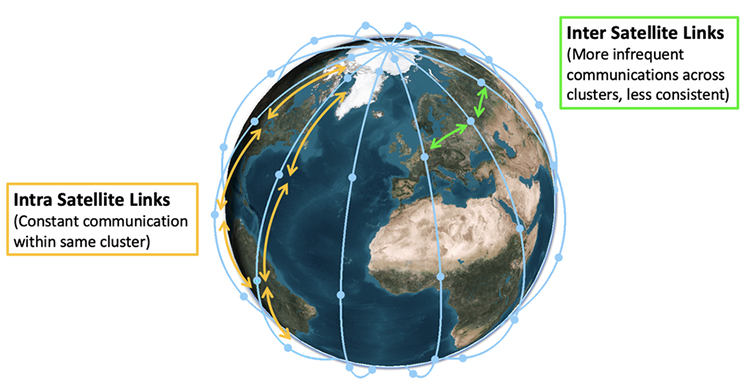
Inter-satellite links convert a constellation from a collection of bent-pipe relays into a routed network. Without ISLs, every connection must route through a ground gateway visible to both the source and destination satellites, severely limiting coverage in oceanic and polar regions and increasing latency due to ground hops. With ISLs, traffic can be transmitted entirely in space, and gateway placement becomes an economic and regulatory choice rather than a physical necessity for connectivity.
Laser Crosslinks at 1550 nm
Optical inter-satellite links operating at approximately 1550 nm have become the dominant technology for high-throughput crosslinks. Starlink has deployed laser ISLs across most of its current-generation systems and reports throughputs of 100 Gb/s or higher per link, while Amazon Leo plans optical crosslinks. Optical crosslinks deliver bandwidth that RF crosslinks cannot easily match and avoid spectrum coordination issues, but they impose stringent pointing, tracking, and acquisition requirements and add a payload subsystem that must be qualified, integrated, and tested.
Direct-to-Device Satellite Communications
Direct-to-device satellite service has emerged as a distinct architecture with distinct RF challenges.
The RF Challenge of Connecting Directly to Smartphones
Rather than serving a managed terminal with a directional antenna, a D2D system serves an unmodified handset with an omnidirectional antenna, modest transmit power, and battery-driven RF behavior. The link budget must close end-to-end with these constraints, which forces the satellite-side antenna to be enormous. AST SpaceMobile’s BlueBird satellites carry phased-array antennas with an aperture approaching 64 square meters, and follow-on designs are still larger. Lynk Global, Iridium, Globalstar, and Starlink’s D2D payloads each take different approaches to the same fundamental problem of closing a link to a handset from LEO.
Spectrum Sharing Between Satellites and Cellular Networks
Spectrum for D2D operates in cellular bands. Starlink’s arrangement with T-Mobile uses PCS spectrum near 1.9 GHz. AST SpaceMobile’s partnerships use AWS and other cellular bands in cooperation with terrestrial mobile network operators. The coexistence problem arises between satellite downlinks and terrestrial base-station receivers operating in the same band.
3GPP Release 17 and Non-Terrestrial Networks
Out-of-band rejection, sidelobe control, and beam steering accuracy all bear on whether terrestrial networks experience desensitization. The 3GPP non-terrestrial network specifications in Release 17 introduced satellite operation as a standardized capability, with Releases 18 and 19 extending capabilities for handheld terminals and IoT devices and improving Doppler and timing handling. The standards work has accelerated the move from proprietary D2D protocols to integration with mainstream cellular, and the resulting RF performance requirements on the satellite payload are correspondingly stringent.
Oscillators, Synthesizers, and Frequency Stability
Oscillators, synthesizers, and frequency converters become more important as spectral density increases.
Phase Noise and Beamforming Coherence
Phase noise, spurs, frequency accuracy, and short-term stability affect modulation quality, demodulation margin, beamforming coherence, and adjacent-channel performance. In electronically steered arrays, the local oscillators driving thousands of channels must maintain phase coherence to within a small fraction of a wavelength to preserve beam shape. Distributed reference architectures with low-jitter clock distribution and careful attention to LO leakage and pulling are now standard practice in array payloads.
Chip-Scale Atomic Clocks and Precision Timing
Onboard frequency standards range from temperature-compensated and oven-controlled crystal oscillators in less demanding applications to ultra-stable oscillators and chip-scale atomic clocks where required. Some defense LEO programs are evaluating CSACs for applications that require holdover beyond what crystal-based references can provide. Phase noise budgets in V- and E-band terminals are tighter than in lower-frequency systems because phase noise multiplies with frequency in the upconverter chain.
RF Interconnects and Packaging Challenges
Switches and interconnects are similarly important but often less visible in system-level discussions.
Millimeter-Wave Losses and Transition Effects
At microwave and millimeter-wave frequencies, every transition has RF consequences. Board launches, coaxial connectors, cable assemblies, waveguide interfaces, flex circuits, package transitions, and shielding structures affect loss, VSWR, isolation, leakage, and repeatability. These effects become more difficult to control as terminals move toward thinner profiles, wider bandwidths, and higher channel counts.
Packaging Technologies for High-Channel-Count Arrays
The packaging approach, whether organic substrate, low-temperature co-fired ceramic, or wafer-level integration, increasingly determines whether a phased array meets its intended performance at production volume.
The Future of RF Engineering in Low Earth Orbit
Whether projected satellite populations reach the numbers in the filings, the trajectory is a straight line upward. The LEO environment will become increasingly crowded over the next decade, and RF and microwave engineering challenges will compound. Filter selectivity, amplifier linearity, phase noise budgets, beam discipline, and test methodology that were adequate in a less crowded environment will not be adequate in the future. The components, subsystems, and test systems that succeed will be those designed with the assumption that the spectrum and the orbit are shared resources operating closer to their physical limits than at any time in the history of satellite communications.