


Key Takeaways
- As drone adoption continues to grow across commercial, recreational, and government sectors, Counter-UAS solutions have become a critical component of modern security and airspace protection.
- Effective Counter-UAS platforms leverage a layered architecture built around detection, identification, tracking, and mitigation capabilities.
- RF technologies remain at the heart of modern counter-drone architectures, supporting everything from drone detection and geolocation to electronic attack and jamming.
- Components such as high-power amplifiers, RF filters, antennas, couplers, and power devices are critical to achieving reliable counter-UAS performance.
- Through its extensive portfolio of RF and microwave solutions, RFMW helps engineers accelerate the development of next-generation Counter-UAS systems.
What is Counter UAS?
Counter-UAS (C-UAS), or Counter Uncrewed Aircraft Systems, refers to the technologies and strategies used to detect, track, identify, and mitigate unauthorized UAS operating in low-altitude airspace. According to the Federal Aviation Administration (FAA), a UAS consists of an unmanned aircraft and all associated equipment necessary for safe and efficient operation.
While the terms counter-UAS system and counter-drone system are often used interchangeably, there is an important distinction between drones and a UAS. A drone refers only to the uncrewed aerial vehicle (UAV) itself. In contrast, a UAS encompasses the complete system required for flight operations, including the aircraft, the control station, communication links, and supporting equipment.
Term | Definition |
Counter UAS | System designed to detect and mitigate unauthorized drones |
Anti-Drone Technology | Individual technology used within a Counter UAS architecture |
Drone Mitigation | Action taken to stop or redirect a drone |
UAS | Unmanned Aircraft System |
6 Core UAS Capabilities that Drive Counter Drone Requirements
While UAS platforms vary widely in size, complexity, and mission, every system relies on a common set of core capabilities to operate successfully. These capabilities, such as sensing, navigation, communications, and command and control, enable a drone to navigate its environment, complete its mission, and maintain connectivity with operators.
C-UAS solutions are designed around these same capabilities. Rather than focusing on a specific drone model or threat type, C-UAS technologies seek to detect, monitor, disrupt, or deny the functions that make UAS operations possible. For example, radar and RF sensors are different technologies, but both support the broader C-UAS objective of detecting and tracking airborne threats. Similarly, mitigation techniques such as jamming, protocol takeover, or kinetic intercepts are designed to interfere with critical UAS capabilities and prevent a drone from completing its mission.
Although platforms vary significantly in size, complexity, and mission, UAS depends on several core capabilities to operate effectively. From there, counter strategies interfere with core capabilities. For example, some C-UAS tech uses one sensor type like RF or radar, but the core capability requiring counter strategy is sensing.
The six core UAS capabilities outlined below provide a useful framework for understanding both how drones operate and how modern C-UAS solutions are designed to counter them.
1. Autonomous Navigation
Drones can execute pre-programmed missions without continuous operator control. Once launched, the aircraft follows waypoint routes and mission objectives using onboard flight controllers and navigation systems.
Counter UAS Implications:
- Drones may continue flying even if communications links are disrupted.
- RF jamming alone may not stop the threat.
- Detection systems must identify the aircraft itself rather than rely solely on command-and-control (C2) transmissions.
- Multi-sensor tracking becomes increasingly important.
2. GPS-Assisted Flight
Global Navigation Satellite Systems (GNSS), including GPS, provide accurate positioning, navigation, and timing information for autonomous and semi-autonomous flight operations.
Counter-UAS Implications:
- GPS enables precise waypoint navigation.
- Navigation signals may be vulnerable to electronic attack techniques in certain scenarios.
- Operators should understand whether mitigation options target navigation links, command links, or both.
- Backup navigation methods may reduce the effectiveness of GPS denial techniques.
3. RF Command-and-Control (C2) Links
Most drones transmit command, telemetry, and video data across RF communications channels. These emissions often provide the earliest indication of drone activity.
Counter-UAS Implications:
- RF sensors can detect drone activity before visual contact is established.
- Signal analysis may help identify drone type, manufacturer, protocol, or operator location.
- RF-based systems can contribute to both detection and mitigation workflows.
- Spectrum awareness is often the foundation of electronic warfare-based counter-drone operations.
4. First-Person-View (FPV) Operation
First-Person-View (FPV) drones transmit live video feeds that allow operators to remotely pilot aircraft with high precision. FPV systems have become increasingly common in military and security environments because they support accurate maneuvering and target engagement.
Counter-UAS Implications:
- FPV systems generate RF emissions that may be detectable.
- Video transmission bands introduce additional electronic attack opportunities.
- Operators must account for rapidly maneuvering low-altitude threats.
- Detection timelines are often compressed compared with conventional drones.
5. Coordinated Operation
Advanced UAS platforms may operate in coordinated groups, sharing information, dividing tasks, or approaching targets simultaneously from multiple directions.
Counter-UAS Implications:
- Single-target defense systems may become overwhelmed.
- Sensor fusion and automated threat prioritization become critical.
- Multiple mitigation techniques may need to operate concurrently.
- Command-and-control software plays an increasingly important role in engagement management.
6. Low-RCS Flight Characteristics
Small drones present unique detection challenges due to their compact size, low speed, and limited radar cross section (RCS). Many are difficult to distinguish from birds or environmental clutter.
Counter-UAS Implications:
- Radar performance may be affected by clutter and environmental conditions.
- RF sensing can supplement radar performance when drones emit signals.
- Electro-optical and infrared sensors may provide additional confirmation.
- Multi-layered detection architectures generally outperform single-sensor systems.
Anatomy of a Modern Counter UAS Platform
What does it take to defend against today’s increasing drone capabilities? Modern C-UAS strategies rely on multiple architecture layers working together to mitigate threat from detection to defeat.
Detection Layer
The detection layer serves as a first line of defense, providing early warning that a drone has entered a protected area or area of interest. Depending on operational requirements, detection systems may be deployed as fixed-site installations or portable solutions for temporary and mobile operations.
To maximize coverage and effectiveness, modern C-UAS platforms often combine multiple sensor technologies, including:
- RF detection
- Radar
- Acoustic
- Electro-Optical/Infrared (EO/IR) Cameras
Counter UAS Radar vs RF Detection
Today’s C-UAS platforms rely on a variety of sensor solutions. Two of the most common approaches are radar and RF detection. In optimized C-UAS architectures, neither radar nor RF detection is viewed as a standalone solution. Effective systems integrate both technologies for comprehensive detection coverage.
There are two primary types of radar:
- Active Radar transmits signals actively and analyzes reflected signals, providing precise target detection and tracking.
- Passive Radar does not emit signals but instead detects and analyzes reflections from external signals, such as broadcast or communication signals. This makes passive radar inherently stealthy, as it does not emit detectable signals itself, making it suitable for sensitive or covert operations.
Most modern UAS use radio signals in the communication link. RF sensors then receive and analyze signals to detect, identify, and track operations. However, radar-equipped UAS and autonomous platforms create challenges that RF-only detection systems may not address. As a result, radar remains a critical component of a comprehensive C-UAS strategy.
For example, radar offers all weather performance, including darkness. Additionally, it can target coordinated groups of drones or those without active RF transmissions, which may be undetectable by RF-based sensors alone.
Identification Layer
When a counter-UAS platform detects a UAV signature, operators can quickly classify the drone as friendly, authorized, or potentially hostile without disrupting ongoing operations. Advanced systems can also identify specific drone models, providing security teams with valuable intelligence on performance characteristics such as range, speed, and payload capacity.
Key functions include:
- Signal classification
- Protocol recognition
- Threat scoring
Tracking Layer
Once a drone is detected, counter-drone technology provides continuous visibility into its navigation path as well as the location of the pilot, enabling operators to maintain real-time awareness of the airspace. Through persistent tracking, the system monitors drone movements throughout the duration of a flight while multi-sensor fusion combines data from RF sensors, radar, and other sources into a unified operating picture.
By correlating information from multiple sources, the Tracking Layer improves detection accuracy, maintains track continuity, reduces false alarms, and can help identify the location of the drone operator when supported by available signals.
Mitigation Layer
Once a threat has been identified, mitigation technologies can then be used to deter, disrupt, or neutralize unauthorized UAVs. Countermeasures may include:
- Electronic Warfare (EW)
- RF Jamming
- Directed Energy Systems
- Kinetic Interceptors
Anti-UAV Systems utilize a wide range of anti-drone technologies to safely and effectively mitigate threats while minimizing disruption to the surrounding environment. Directed-energy solutions, such as high-energy lasers, offer a cost-effective means of engaging drones at extended ranges. Their rapid deployment, precision targeting, and limited collateral effects make them well-suited for protecting sensitive sites and operating in populated areas. However, their effectiveness can be reduced by adverse weather conditions, atmospheric interference, and line-of-sight limitations.
In environments where electronic or directed-energy effects are impractical, ineffective, or unavailable, kinetic countermeasures provide an alternative means of neutralizing UAV threats. Kinetic solutions physically prevent a drone from reaching its intended target by disabling, intercepting, or destroying the aircraft through approaches like missile systems, interceptor drones, net-based capture technologies, and other specialized defeat mechanisms.
While kinetic countermeasures can provide an immediate and visible response, they often present challenges related to cost, operational complexity, safety, and scalability. They may also be less effective against large numbers of drones operating simultaneously as a coordinated swarm.
What is Drone Jamming?
Enter the RF solution: drone jamming. For many counter-UAS operations, the most practical response is not to destroy the drone, but to disrupt its ability to operate. Jammers interfere with the communications link between a drone and its operator to prevent aircraft from receiving commands or transmitting data. When this connection is lost, most commercial drones automatically initiate pre-programmed safety protocols, such as landing in place, hovering, or returning to their launch location. However, more advanced platforms may continue autonomous operations after link loss.
Key Characteristics Include:
- Flexible deployment options: Jamming systems may be installed as fixed-site defenses, vehicle-mounted platforms, or highly mobile, handheld systems. Depending on operational requirements, they can direct energy toward a specific target or provide broader omnidirectional coverage.
- Disruption through RF interference: Jammers transmit electromagnetic noise on the frequencies commonly used for drone command-and-control and data transmission, effectively overpowering the signals exchanged between the drone and its operator. By disrupting these communications, the drone is no longer able to receive instructions or relay information.
- Automated drone response: Once communications are interrupted, most commercial UAVs will execute built-in fail-safe procedures, typically landing safely or returning to their programmed home location.
Jamming Considerations
RF jamming can be highly effective against remotely operated drones and coordinated groups of UAVs that rely on common control frequencies. However, organizations should understand its operational and regulatory limitations before deployment:
- Strictly regulated in many countries, including the United States.
- Less effective against autonomous drones operating on pre-programmed flight paths.
- Does not provide positive control of the targeted aircraft.
- Does not identify the pilot or provide flight path intelligence.
- May interfere with nearby communications, including cellular, Wi-Fi, and other RF-dependent systems.
Jamming vs Spoofing
While jamming disrupts the communication link between a drone and its operator, spoofing takes a more active approach by transmitting counterfeit GPS signals that mimic legitimate satellite transmissions. By deceiving the drone into trusting false navigation data, a spoofing system can alter the aircraft’s course, redirect its flight, or potentially take control of its navigation functions. Unlike jamming, which simply denies access to communications, spoofing manipulates the information the drone receives, making it a powerful but more complex counter-UAS technique.
Spoofing Considerations
Spoofing may offer greater control than traditional jamming, but it also presents several limitations:
- Strictly regulated in many countries, including the United States.
- Less effective against drones not using GPS.
- Does not identify the pilot or provide operator location intelligence.
- May affect nearby GPS-dependent systems, potentially impacting other authorized users operating in the area.
Leveraging RFMW Advantage in Counter UAS Strategy
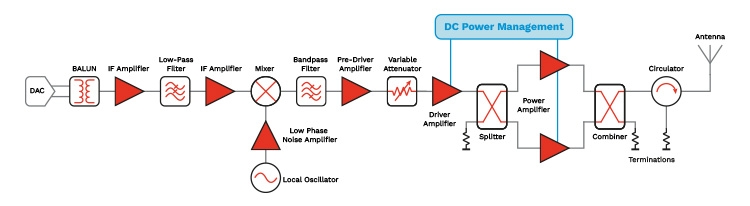
Brute Force Interference Jamming Block Diagram
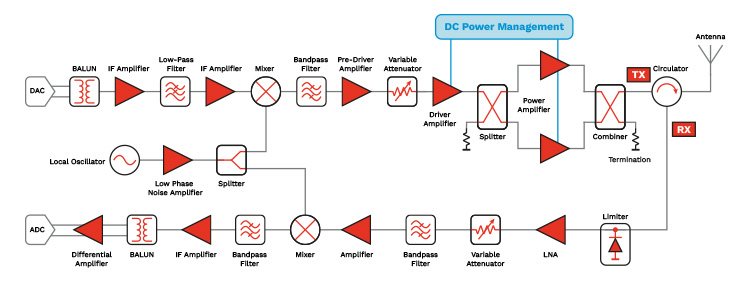
Smart Jamming Block Diagram
As a global leader in RF and microwave component distribution, RFMW brings more than two decades of industry expertise to the rapidly evolving counter-UAS market. By combining deep technical expertise with a broad ecosystem of leading suppliers, RFMW helps customers accelerate the development of advanced drone defense capabilities.
From detection and identification to jamming and mitigation, RFMW’s value-added design support includes application-specific block diagrams and reference solutions that simplify system development and reduce time to market (Figures 1 and 2). Supported by an extensive portfolio of RF and microwave semiconductors, connectors, components, and power products, RFMW provides the building blocks needed to develop effective, reliable, and scalable counter-UAS solutions.
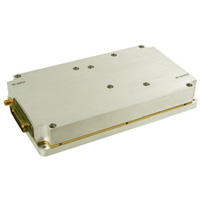
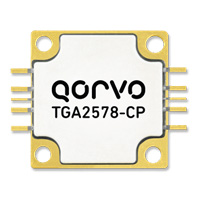
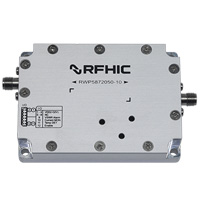
Power Amplifiers
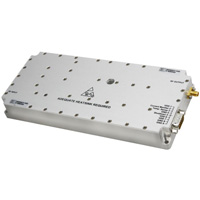
Whether supporting RF jamming, electronic warfare, spoofing, or long-range signal transmission, amplifiers provide the power needed to effectively project RF energy over operationally relevant distances. High-power amplifiers enable greater standoff distances, broader coverage areas, and more reliable disruption of drone communications. Technologies such as GaN and LDMOS are particularly well suited for counter-UAS applications due to their high efficiency, power density, and ability to operate across wide frequency ranges.
1208 |
1193 |
TGA2578-CP |
RWP5872050-10 |
· Freq: 0.5-2.7 GHz · Gain: 50 dB · Psat: 100W · Supply: 28 Vdc | · Freq: 0.02-1.0 GHz · Gain: 53 dB · Psat: 100W · Supply: 28 Vdc | · Freq: 2.0-6.0 GHz · Gain: 26 dB · Psat: 30W · Supply: 28 Vdc | · Freq: 5.8-7.2 GHz · Gain: 35 dB · Psat: 50W · Supply: 32 Vdc |
Discrete Power Transistors
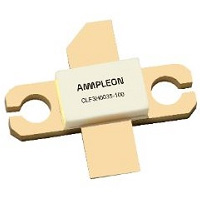
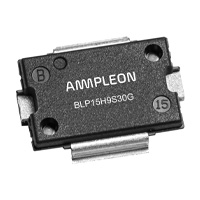
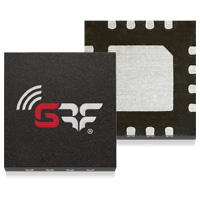
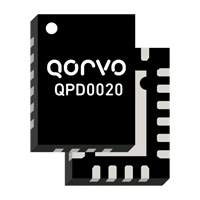
Discrete power transistors are critical to C-UAS systems because they efficiently manage the high-power levels required for radar, RF jamming, and other counter-drone functions. Their high-speed switching capabilities help maximize system performance while minimizing power loss and heat generation. They also provide the reliability needed for continuous operation in demanding environments.
CLF3H0035-100U |
BLP15H9S30G |
GRF0030 |
QPD0020 |
· Freq: 0.5-2.5 GHz · Pout: 80 W · PAE: >46% · Supply: 50 V | · Freq: 0.03-1.0 GHz · Pout: 25 W · PAE: >35% · Supply: 50 V | · Freq: DC-6 GHz · Pout: 50 W · PAE: 60% · Supply: 50 V | · Freq: DC-6 GHz · Pout: 35 W · PAE: 78% · Supply: 48 V |
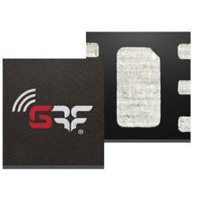
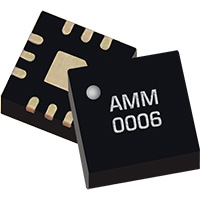
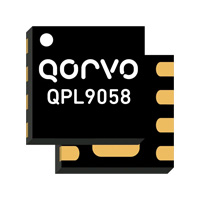
Low Noise Amplifiers
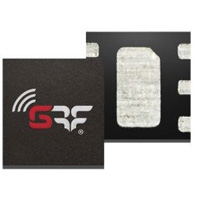
Low noise amplifiers (LNAs) are critical to C-UAS systems because they boost weak RF signals from drones while adding minimal noise or distortion. This improves detection range, signal clarity, and target identification, especially in congested electromagnetic environments. LNAs help ensure reliable performance when detecting low-power or distant drone transmissions.
GRF2013 |
GRF2043 |
AMM-9852PSM |
QPL9058 |
· Freq: 0.01-9 GHz · Gain: 18.5 dB · P1dB: 22.5 dBm · Noise Figure: 1.9 dB · Size: 1.5 x 1.5 mm | · Freq: 0.15-6 GHz · Gain: 18.5 dB · P1dB: 22 dBm · Noise Figure: 1.8 dB · Size: 1.5 x 1.5 mm | · Freq: DC-20 GHz · Gain: 17.5 dB · P1dB: 20 dBm · Noise Figure: 1.8 dB · Size: 3 x 3 mm | · Freq: 0.05-6 GHz · Gain: 18 dB · P1dB: 20.5 dBm · Noise Figure: 0.6 dB · Size: 2 x 2 mm |
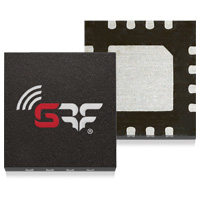
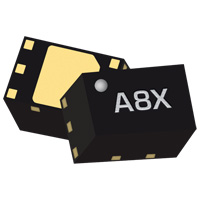
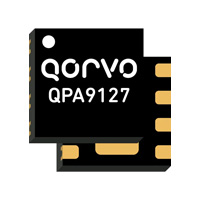
Gain Block and Driver Amplifiers
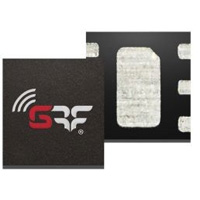
Gain block and driver amplifiers are essential to C-UAS systems because they strengthen RF signals throughout the signal chain, ensuring sufficient power for detection, communication, and countermeasure functions. Gain blocks provide consistent signal amplification, while driver amplifiers boost signals to levels required by high-power output stages. Together, they help maximize system range, signal integrity, and overall RF performance.
GRF2010 |
GRF5511 |
ADM-8350PSM |
QPA9127 |
· Freq: 0.05-5 GHz · Gain: 10.2 dB · P1dB: 20 dBm · OIP3: 36 dBm · Size: 1.5 x 1.5 mm | · Freq: 0.4-8 GHz · Gain: 20.1 dB · P1dB: 26.1 dBm · OIP3: 39.6 dBm · Size: 3 x 3 mm | · Freq: 0.09-6 GHz · Gain: 23 dB · P1dB: 22 dBm · OIP3: 40 dBm · Size: 1.3 x 2 mm | · Freq: 1-6 GHz · Gain: 20 dB · P1dB: 19.5 dBm · OIP3: 35 dBm · Size: 2 x 2 mm |
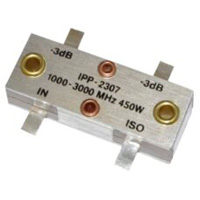
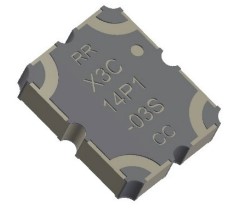
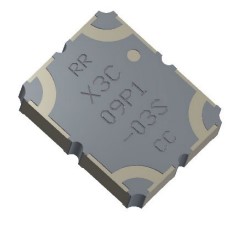
Hybrid Couplers
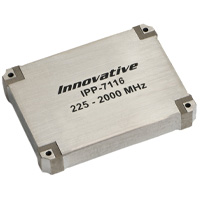
Hybrid couplers split, combine, and route RF signals with precise control and minimal signal loss. They help optimize the performance of radar, communication, and electronic countermeasure systems by improving signal distribution and isolation between components. This enhances overall system efficiency, reliability, and detection effectiveness.
IPP-7116 |
IPP-2307 |
X3C14P1-03S |
X3C09P1-03S |
· Freq: 0.225-2 GHz · Insert. Loss: 0.8 dB · Amp Bal: ±1 dB · Phase Bal: ±5° · Power: 200W | · Freq: 1-3 GHz · Insert. Loss: 0.25 dB · Amp Bal: ±1.1dB · Phase Bal: ±5° · Power: 450W | · Freq: 1.2-1.7 GHz · Insert. Loss: 0.2 dB · Amp Bal: ±0.35 dB · Phase Bal: ±4° · Power: 150W | · Freq: 0.8-1 GHz · Insert. Loss: 0.2 dB · Amp Bal: ±2 dB · Phase Bal: ±4° · Power: 110W |
RF Filters
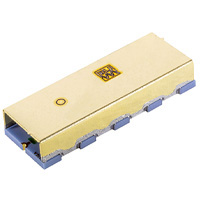
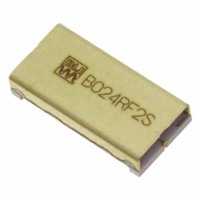
RF filters are critical building blocks in modern counter-UAS systems. Technologies including ceramic resonator, cavity, and microstrip bandpass filters help suppress unwanted signals, improve receiver selectivity, and preserve dynamic range for RF detection, tracking, and electronic attack functions. In high-interference environments, advanced filtering can significantly improve the ability to detect and characterize drone-related emissions.
B042RC3S |
B024RF2S | 6DF4-2500/500-M |
MFBP-00165GSM1 |
MFBP-00162GSM1 |
· Type: Bandpass · Center Freq: 4.5 GHz · Bandwidth: 2.4 GHz · Return Loss: 20 dB · Size: 22.9 x 8.1 mm | · Type: Bandpass · Center Freq: 2.4 GHz · Bandwidth: 1.08 GHz · Return Loss: 15 dB · Size: 12.7 x 6.4 mm | · Type: Bandpass · Center Freq: 2.5 GHz · Bandwidth: 0.5 GHz · Return Loss: 14 dB · Size: 12.7 x 5.1 mm | · Type: Bandpass · Center Freq: 1.13 GHz · Bandwidth: 083 GHz · Return Loss: 22 dB · Size: 4.25 x 7.5 mm | · Type: Bandpass · Center Freq: 1.68 GHz · Bandwidth: 0.69 GHz · Return Loss: 21 dB · Size: 4.25 x 7.5 mm |
Circulators
Circulators direct RF signals between transmitters, receivers, and antennas while preventing unwanted signal reflections and interference. This allows radar and electronic warfare systems to share antennas efficiently while protecting sensitive receiver components from high-power transmitted signals. By improving signal isolation and system reliability, circulators help maximize detection, tracking, and countermeasure performance.
RFCR8457N | C2AR25 |
· Freq: 0.8-2 GHz · CW Power: 50 W · Insert. Loss: 0.6 dB · Isolation: 16 dB | · Freq: 2.4-2.5 GHz · CW Power: 75 W · Insert. Loss: 0.25 dB · Isolation: 20 dB |
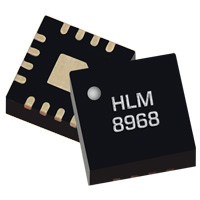
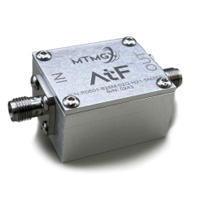
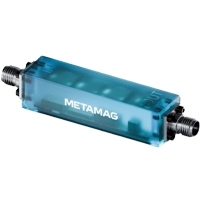
Limiters
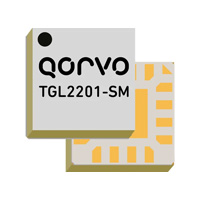
Limiters protect sensitive receiver components from high-power RF signals, whether from nearby transmitters, intentional jamming, or strong signal reflections. By automatically restricting excessive signal levels, limiters prevent receiver damage and maintain system performance in contested electromagnetic environments. This helps ensure reliable detection, tracking, and operation of radar and RF sensing systems.
TGL2201-SM |
HLM-100001PSM |
R0601-825M-02G-N21-SMAFF |
|
· Freq: 2-12 GHz · Insertion Loss: 1 dB · Return Loss: 10 dB · CW Input Power: 5W | · Freq: DC-20 GHz · Insertion Loss: 0.9 dB · Return Loss: 22 dB · CW Input Power: 10W | · Freq: 0.825-1.85 GHz · Insertion Loss: 7 dB · Return Loss: 11 dB · Peak Input Power: 20W · Frequency selective limiting | · Freq: 2-8 GHz · Insertion Loss: 2 dB · Return Loss: 12.5 dB · CW Input Power: 10W · Frequency selective limiting |
RF Combiners / Dividers
RF combiners and dividers enable efficient signal routing throughout counter-UAS systems. Dividers distribute signals across multiple receiver and processing channels, while combiners are commonly used in radar and electronic attack architectures to combine the output power of multiple amplifier stages into a single high-power transmit path. This improves system scalability, coverage, and overall RF performance.
IPP-1130 | IPP-1105 |
· Freq: 1.2-1.4 GHz · Insertion Loss: 0.3 dB · Isolation: 18 dB · Power Handling: 500W · Size: 2 x 3 in | · Freq: 0.5-2.5 GHz · Insertion Loss: 0.8 dB · Isolation: 8 dB · Power Handling: 200W · Size: 3 x 4 in |
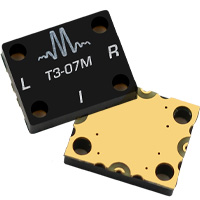
Mixers
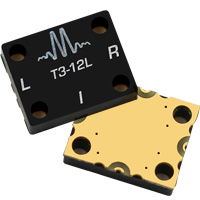
By translating high-frequency signals to intermediate or baseband frequencies, mixers make it easier to detect, analyze, and identify drone communications and radar returns. This improves receiver sensitivity, signal intelligence capabilities, and overall system performance.
T3-07MCQG-1 |
T3-12LCQG-1 |
· RF/LO Freq: 0.001-7 GHz · IF Freq: 0.001-4 GHz · Conversion Loss: 6.5 dB · Input IP3: 32 dBm · Size: 10.16 x 8.13 mm | · RF/LO Freq: 0.01-12 GHz · IF Freq: 0.001-4 GHz · Conversion Loss: 7.5 dB · Input IP3: 30 dBm · Size: 10.16 x 8.13 mm |
Terminations
Terminations absorb unused RF energy and provide proper impedance matching throughout the signal chain. This minimizes signal reflections, reduces interference, and helps maintain accurate performance in radar, communication, and electronic warfare systems. By ensuring stable operation and protecting sensitive components, terminations contribute to overall system reliability and efficiency.
SMT372503ALN2F | 32B7163F | IPP-TN113-50 | IPP-TN215-50 | TD00PAT0150R0J |
· Freq: DC-2.2 GHz · Input Power: 200W · Resistance: 50Ω · Size: 9.4 x 5.2 mm | · Freq: DC-4 GHz · Input Power: 100W · Resistance: 50Ω · Size: 13.1 x 6.4 mm | · Freq: DC-3 GHz · Input Power: 275W · Resistance: 50Ω · Size: 9.5 x 9.5 mm | · Freq: DC-1.6 GHz · Input Power: 350W · Resistance: 50Ω · Size: 31.8 x 12.7 mm | · Freq: DC-4 GHz · Input Power: 300W · Resistance: 50Ω · Size: 24.8 x 9.5 mm |
Antenna
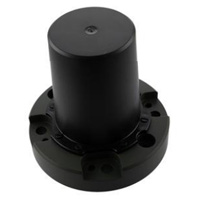
Antenna design directly impacts system range, coverage, accuracy, and the ability to detect and respond to aerial threats. By enabling reliable signal transmission and reception, antennas are critical to overall C-UAS effectiveness and situational awareness.
PEANOM1143 |
· Type: Omnidirectional · Freq: 0.5-6 GHz · Gain: 4 dBi · Input Power: 200W · Size: 5 x 5 x 5.12 in |
Counter UAS Frequently Asked Questions
What is Counter UAS?
Counter-Uncrewed Aircraft Systems (Counter-UAS or C-UAS) refers to the technologies, processes, and systems used to detect, identify, track, and mitigate unauthorized or potentially hostile drones. Counter-UAS solutions help protect critical infrastructure, military installations, public venues, airports, and other sensitive locations from drone-related threats.
How does a Counter UAS system work?
Most Counter-UAS systems operate through a layered approach that includes four key functions:
- Detection – Identifying the presence of a drone using RF sensors, radar, EO/IR cameras, acoustic sensors, or a combination of technologies.
- Identification – Classifying the drone, determining whether it is authorized, and assessing the potential threat.
- Tracking – Monitoring the drone’s location, flight path, and, when possible, the operator’s location.
- Mitigation – Using electronic warfare, jamming, spoofing, directed energy, or kinetic systems to disrupt or neutralize the threat.
What is the difference between radar and RF detection?
Radar detection identifies drones by transmitting radio waves and analyzing the reflected signals from the aircraft. Radar can detect both cooperative and non-cooperative drones, including autonomous systems that are not actively transmitting.
RF detection passively monitors the radio frequencies used by drones and their controllers.
RF sensors can often identify drone models, communication protocols, and operator locations, but they are generally most effective against drones that actively communicate via RF signals.
Many modern Counter-UAS platforms combine both technologies to improve detection coverage and accuracy.
What technologies are used in anti-drone systems?
Counter-UAS platforms typically integrate multiple technologies, including:
- RF detection sensors
- Radar systems
- Electro-optical and infrared (EO/IR) cameras
- Acoustic sensors
- Artificial intelligence and sensor fusion software
- Electronic warfare systems
- RF jamming technologies
- GPS spoofing technologies
- Directed-energy systems, such as lasers
- Kinetic interceptors, including interceptor drones and net systems
Are drone jamming systems effective against autonomous drones?
RF jamming is highly effective against drones that rely on active communications links between the aircraft and operator. However, autonomous drones operating on pre-programmed flight paths may continue their mission even after communication links are disrupted. As drone autonomy increases, Counter-UAS systems are increasingly relying on layered detection and mitigation strategies rather than jamming alone.
What is sensor fusion in Counter UAS?
Sensor fusion is the process of combining data from multiple sensors, such as RF detectors, radar, EO/IR cameras, and acoustic systems, into a single operational picture. By correlating information from different sources, sensor fusion improves detection accuracy, reduces false alarms, enhances track continuity, and provides operators with a more complete understanding of the airspace environment.
What capabilities should a military Counter UAS system include?
Military Counter-UAS systems typically require:
- Long-range detection and tracking
- Multi-sensor fusion
- Drone and operator identification
- Threat classification and prioritization
- Electronic warfare capabilities
- Protection against drone swarms
- Operation in contested RF environments
- Rapid mitigation options
- Integration with command-and-control networks
- Scalability for fixed, mobile, and expeditionary deployments
What role does electronic warfare play in Counter UAS?
Electronic warfare (EW) is a core component of many Counter-UAS platforms. EW systems detect, exploit, disrupt, or deny the electromagnetic spectrum used by drones for command, control, navigation, and data transmission. Capabilities can include RF detection, direction finding, jamming, protocol analysis, and signal intelligence. Because many commercial and military drones rely heavily on RF communications and navigation systems, EW provides a scalable and often non-kinetic approach to countering drone threats.
Sources